Inhardloop

December 22nd, 2016
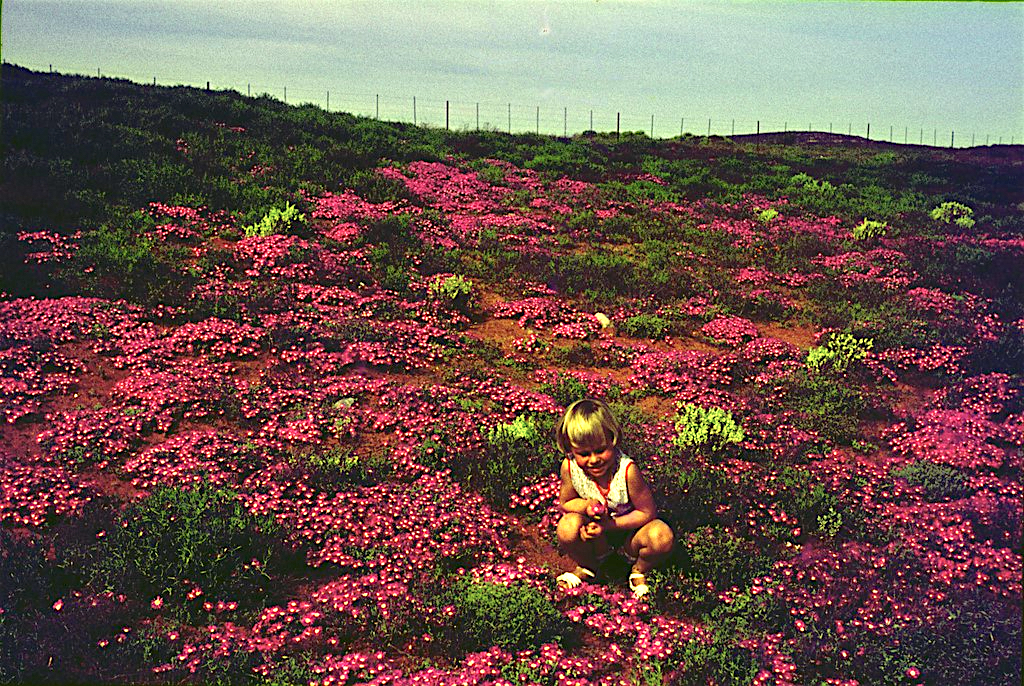
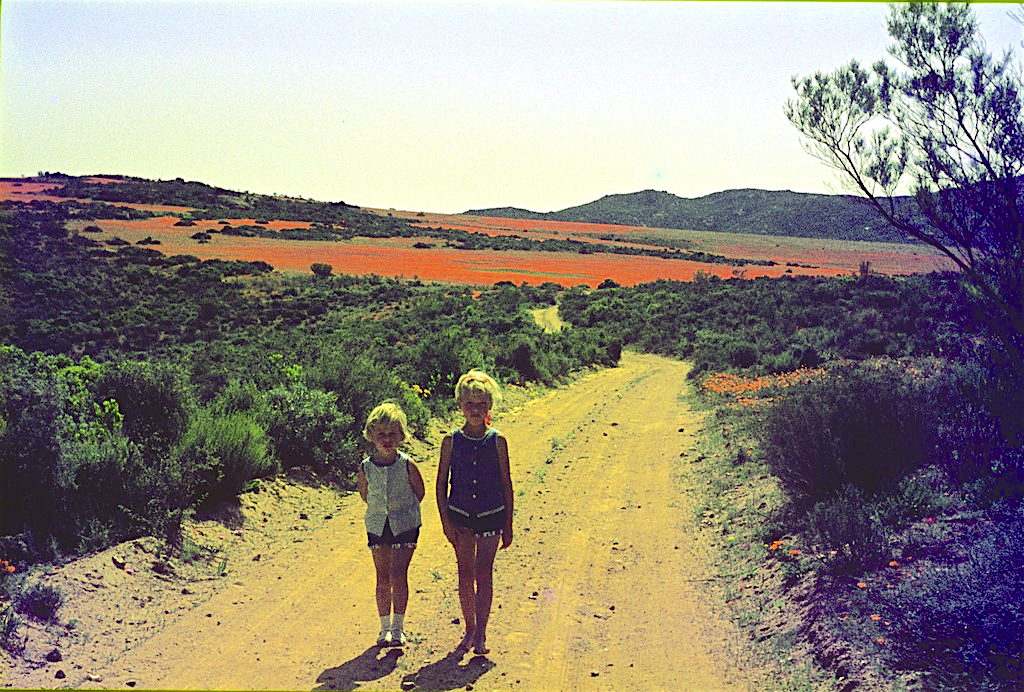
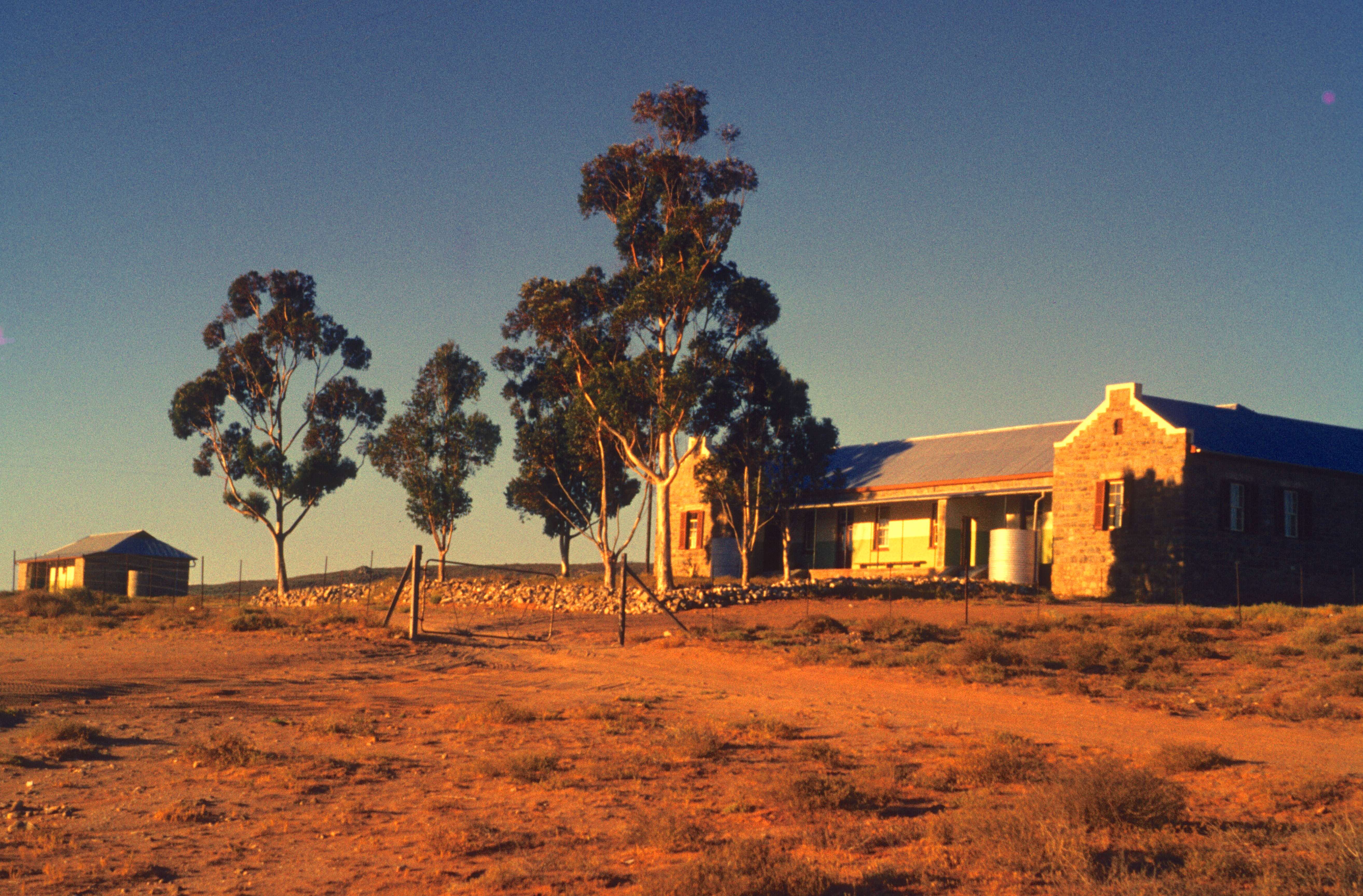
Ek het geleer om hom van agter af in te hardloop. Kleintyd. As ek hoor hy skakel die wit Peugeot se enjin aan in die sink waenhuis bo teen die bult en hy is op pad êrensheen sonder dat ek daarvan weet. Dan glip ek soos ‘n slinks akkedissie by die koshuis se agterdeur uit en wikkel my vierjaaroue beentjies om hom in te haal. Soos n klein stofwolkie in die grondpad sien hy my aangehol kom in sy tru-spieëltje. Witkoppie bonsend, armpies swaai en bene wikkel volstoom. Ek moet hom inhaal voor hy by die hek uit is. Dat ek kan saam. Saamry. Saamkyk. Saamsing. Saamluister. En dalk is daar n maatjie op ‘n ver plaas. Dan sien ek hy trap rem en hy wag vir my. En ons ry sandpaaie langs na plase agter duine en deur droë rivierlope vol doringbome met geel stofferblommetjies en skeletwit pendorings. Soms ry ons ver met die vinnige grondpad tot op Springbok. Dan lê ek met my kop op sy been en slaap op die voorste sitplek. As ek wakkerword is daar toebroodjies wat Mamma ingepak het. Hy weet ek wil weet as hy die pad vat, dat ek kan reg wees vir die saamry. Ek het my atletiekbene gegroei teen daardie bult, het hy vir my gesê. Met die inhardloop van sy kar. As hy my soos ‘n stofwolkie in die wit Peugeot se spieëltjie sien aangehol kom. Hy het dit hoeveel keer vir my vertel.
.
Maar nou die dag, Pappa, toe vat jy weer die pad sonder om my te vertel en ek glip weer soos ‘n slinks akkedissie uit tussen al die mense en mure en vergaderings en toesprake en gassprekers en kom so vinnig as my bene my kan dra om jou bult-op in te haal. Net die keer was jy klaar uit by die hek en hoe ek ookal wuif en roep en uithaal tot ek brandasem moet bly staan,  sien ek jou nie remtrap om vir my te wag nie. En jy kyk nie om nie. Jy weet mos ek wil weet as jy êrensheen gaan. Dat ek kan reg wees met my toebroodjies en om teen jou been te slaap. Net die keer kon ek nie weet nie. En jy kon nie langer wag nie. Selfs al kon jy my in jou truspieëltjie sien uithaal om by te bly, kon jy nie rem nie. En toe staan ek alleen teen die sandpad en sien jou oor die verste bult verdwyn.
.
Ek sal net hier sit en wag tussen die vygies en dorings en helder sterre tot jy later terugkom. Gelukkig is toebroodjies nie nodig vir die hardepad vorentoe nie. Daar’s n boere-oom wat vir ons biltong gee en jy gly nie weer op die nat misvloer en val jou beste pak klere in sy peetjie in nie. En daar’s n reuse-spanspek soos die ene by Baksteenhoek. En Diknek se roosterkoeke staan en rys al. Oubees se buitekamer is reg vir ons kuier.
.
Ek sal bly uitkyk vir jou terugkom, maar dalk… net dalk… wag jy die keer agter die bult vir my. En as ek aanhou en uithou selfs al pyn my bene en brand my bors… dan sien ek jou wag oor die laaste bult. En jy loop in die veld en jy neurie saggies.
.

Storytime

January 21st, 2016

Long long ago, in a land far far away, there lived a group of young girls, led by a smart woman who was a role model as charismatic as Sheryl Sandberg, and teaching us immensely more than Lean-In skills. With her we swam in raging rivers, slept on open beaches, camped in pouring rain, and prayed on mountaintops.  At the foot of a majestic mountain we sang serenades under oak trees before sunrise. Weekends at her home on the edge of primeval forests our nights were immersed in poetry and prose. There she would read to us, recite poems to our eager minds, enrich our lives with wisdom and whit.

When I became a mother a decade after school, she sent me a very precious gift, a tape (i.e. analog cassettes with side A and side B, allowing home recording and sharing with snail mail…) – an hour long voice recording of her poetry readings. Through the years I listened, absorbed, recited… to never let go. The magnetic recording became worn out, and after digitizing the tape awhile back, I now uploaded it to SoundCloud, to listen to this recording when and wherever I feel inclined to.  I am honored to share this snippet – poems by two great South African brothers, WEG Louw and NP Van Wyk Louw – poets whose words I can now recall at will. The poems are in Afrikaans, and even if you are not familiar with the language, listen to the rhythm, enjoy the emotion in the voice. Here’s to Este and all she meant to us.

Este: WEG Louw – NPvW Louw

Na al die kophou en  koershou en die klein bende pikkewyne was ‘Salute!’ nog nooit meer gepas.

USA11 – Ik ben een Afrikaan

December 31st, 2015

New Year’s Eve 2015

Today marks the 11th anniversary of our arrival in the USA. I can say with pride that I speak English like a Californian and Afrikaans like a Bolander. I am also now the proud owner of a Blue as well as a Green passport, and have citizenship on two continents, on both sides of the Atlantic, and indeed on both sides of the equator. At times this balancing act resembles the wild ride on two circus horses, an unrehearsed trick that threatens to tear you right apart.  Contrary to Fiddler On The Roof’s Tevye, I cannot ‘tell you in one word’ that it is Tradition that allows me to keep my balance in this wild gallop, this treadmill around the sun. It is rather a tedious process of molding around a central core, chiseling and grinding till you become a changed person from the one that arrived here 11years ago, and also different from the one you would have been, had you never taken that giant leap acrosse the ocean. In one of the most complex societies and the most multiplexed cultures in the world – this life in Silicon Valley – one has to decide who you are and what you strive for, and I ofen reflect on the words preached to us in High School ‘you have to stand for something, or you’ll fall for anything’. I now recognize how my family has gradually shaped a South-African-Californian fusion in our taste of cooking, reading and activities. This is not a true fusion of cultures. Culture is one of the qualitative aspects of humanity which is hard to  define, and impossible to quantify – especially in an era where data and computational significance are increasingly demanded. Through trials and tribulations, often treading water in a raging current, my changed form has been molded and my new being is gradually crystallizing. Above all I have new clarity, and it dawns on me with every new sun. I know my foundation, I am comfortable with my inner core. I cannot deny it. Ik ben een Afrikaan. And I agree with Chris Barnard who describes it so eloquently: it is not a uniform I am wearing, it is a roof under which I find shelter.

May this great Afrikaan rest in peace.

swaerste

March 25th, 2015

die nuus het raafswart deur die oggendlig gevlieg

my pa se stem kraak 10,000 myl ver

teen my oor

ons harte breek

tyd versplinter en word weer langsaam

volkome

verblindend finaal kon ons 30 seconds-wenspan

nie die akute antwoord uitstel nie

tussen Londen Dakar en Kaap

is n onbekende grenspos oorgesteek

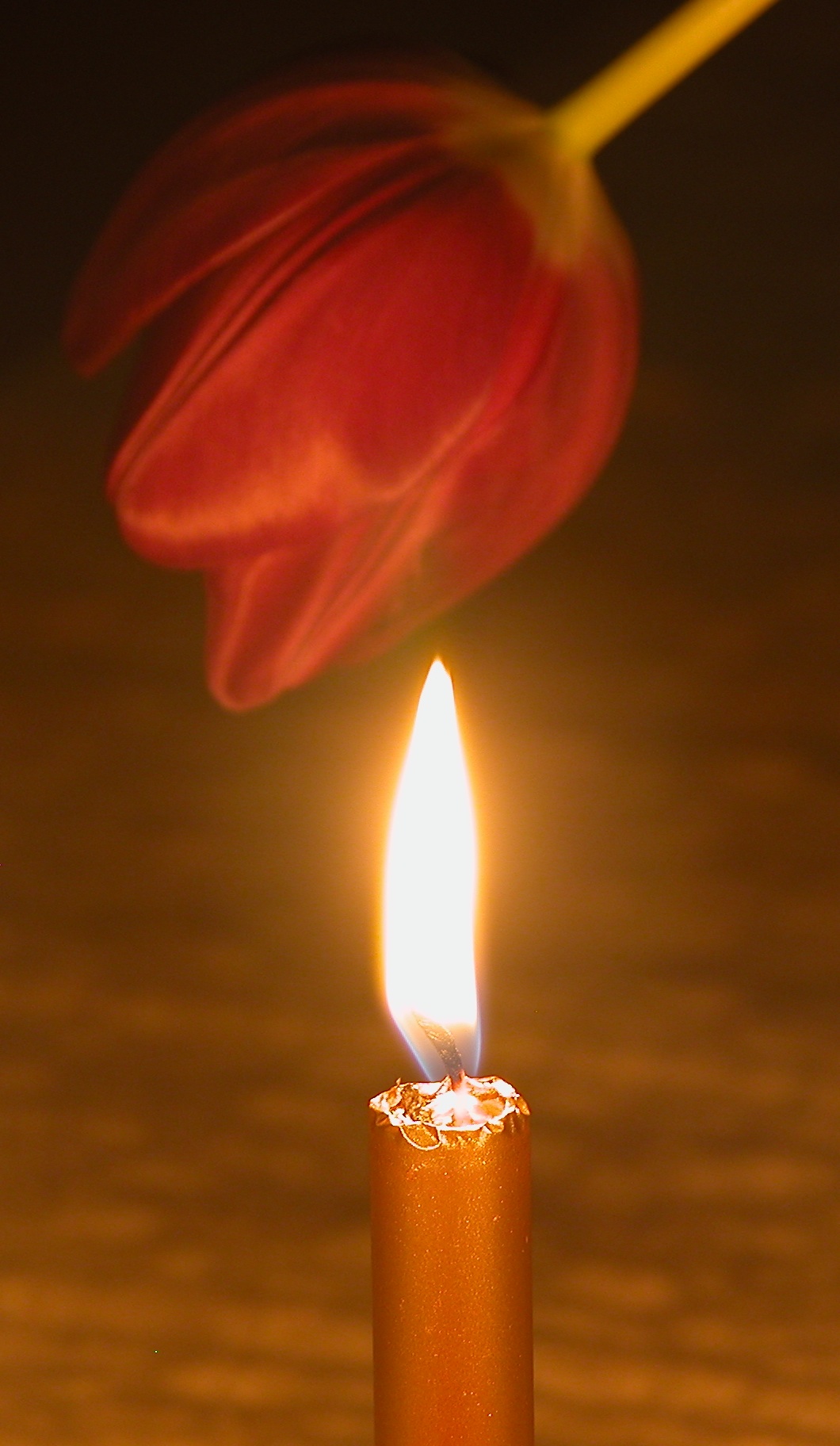
en verward brand ek ver kerse en tulpe en gebede

my suster! my suster!

nou is ons vrae nietig

sonskitter karooswaer

die gordyn het gesak met die applous

jubelend ses-en-veertig

ons encores en einders

strek blinkblou na jou toe

The victory of the unseen

March 22nd, 2015

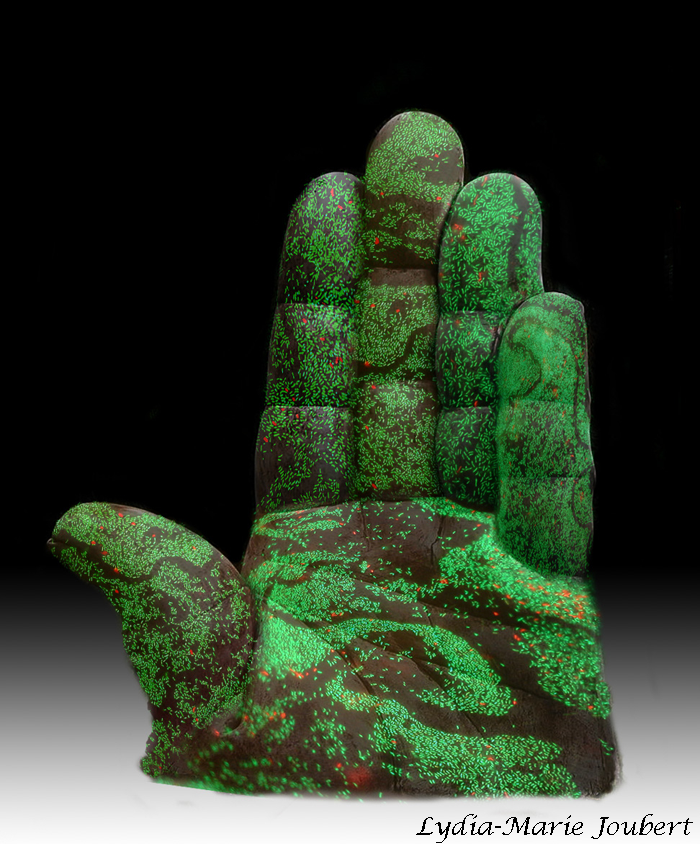
And then the news came from Science: Science and Engineering Visualization Challenge winners have been announced! First I got a phone call… THE CALL. Delightful news! (though I was sworn to secrecy… no sharing, telling, tweeting, rejoicing or celebrating before the press release in the new year….) And so we waited. Science Writer Mark Peplow contacted me for detailed information, more congratulations, and support with the writing of the skills applied and science behind my Illustration entry – and then a delightful Sherlock Holmes hunt to find the sculptor of the Hand used as background for my Illustration of microbial victory. Science had a beautiful story in their press release – and the rest of the world followed… What a thrill!! National Geographic Today, Wired, Popular Science, Science News, Daily Mail, in LumiByte, my own Stanford Medial School, Stanford Daily (the best of), Stanford Scope (blog) and Stanford Medical Facebook Page… and recently their Alumni page under ‘Buzz Worthy’. NIH director featured it in his Director’s blog, and BBC contacted me for use in their upcoming series ‘Human Universe’. Further media coverage continues, highlighting biofilms in context as recently in Live Science (NSF).

Heritage

January 31st, 2015

Tanya’s Heritage

This is one of the most imaginative and delightful series of art I have laid eyes on. The perfect antithesis, and at the same time complementing each other: Norwegian ice and white, and African sun and black, both filled with legends and folklore, cultures known for their stories, their tokens, their rituals and gods. Opposite hemispheres and landscapes, yet filled with similarities that seem perfectly logical (now that it’s done!) to blend in art. I am not sure why I am so drawn to this series… it may be the whispering to my roots and soul, black-and-white harmonies in my bones, a perfect piano keyboard resonating from Tanya’s lens and legends into printed media. Growing up in the hills of Zululand, close to Umgungundlovu in a house of science and arts, she has an invigorating foundation to create something amazing – as this series has just proven. Tanya, you did something extraordinary here, and I am looking forward to more!

Reductionism to Oblivion

December 21st, 2013

During the past few centuries we have turned science into a reductive analysis of complex natural systems, and to such an extent that we’re left with a chaotic distribution of small parts, of substructures of the whole. In reassembling the whole, we now resemble children on a play-mat strewn with Lego bricks, but with little appreciation of what we’re aiming for. The diagram for reconstruction got lost. Why?

Descartes, according to historians, paved the way for reducing complexes to a multitude of simplexes. The process of reduction makes it easier to analyze smaller individual units than endeavoring to give meaning to the sum total of the whole. Holism, on the other hand,  views concepts from the opposite side, looking at the large entirety, with integration of all components, but generally not analyzing every individual component to the molecular level. The interaction of smaller parts, and influence of individual parts on the whole, is viewed as integrated, for a full understanding of the complex structure. In holism the function of the whole cannot be understood in terms of the sum total of the fundamental parts. The whole is always more than the sum of its parts. On the other hand, in reductionism the interaction of individual parts is not accounted for, and the contribution of fundamental influences of substructures on each other is not integrated into a full picture. And we are dedicated to reduction. We dedicate our minds, our time and funding to the reductive approach. We study the gears of a machine without putting it in motion, we describe the wings of a bird without watching it fly, we analyze the contents of a brook without letting it flow. We break apart the physics and chemistry of the smallest fundamental components but lose the perspective to recompile them all into one functioning structure, organism or concept.

The process to reassemble a multitude of subunits into a meaningful whole, is complex. And since we are hooked on reduction, we analyze the reconstruction process, the steps of reassembly, and break it into smaller units, tasks, or project steps, each well defined and eventually fitting into a cost structure, in paid-for services, in milestones, stage-gates and project aims. Since the process to put the parts together into an integrated entirety has now also become compartmentalized, and ultimately reduced to itemized projects, we have lost the natural flow in the assembly of the greater. The holistic approach has once again been put back even further through our stubborn persistence with reductionism. First we took things apart to analyze them, and now we take the reconstruction process apart to find out how to put things back together. We’re reassembling a complex structure from reduced entities, and through further reduced steps of assembly. This sound very similar to Tinkertoy, Meccano, Lego, Lasy… all the great construction toys on the market. The main difference is that without a proper diagram for assembly, every player may end with a slightly altered product, even when rebuilt from the same sub-units. We reconstruct entities that we understand to the minutest detail – but the original composition is hard to find, altered or misinterpreted. And since the reassembly is now done in a time-constrained regimen with financial targets, the paradigm for scientific reassembly and reasoning has changed.We have broken down the reconstruction into project stages, charge monetary value to every action, and in a business-like scientific world, where budget constraints throttle every minute, every action is monitored, logged and paid for. Every scientific process is a race against money, a challenge in time, and no longer a challenge in understanding. Oftentimes the final conclusion seems like a reminder of something we have known all along, and then we wonder, how could we NOT have realized that right from the start.

The face of science is altered, once again. The quest for its true soul is intensified.

Mense van klein plekke

December 12th, 2013

My sus ken Fraserburg se mense en die mense van die plek ken haar. As jong onderwyseres, vars gegradueer in BA-Tale-met-HOD-van-UPE begin sy daar skoolhou in 1979… Afrikaans letterkunde, literatuur, poësie, stelwerk, drama, dialoog… sy voer Hoërskool Fraserburg tot wentrofee in die eindronde van die ATKV toneelfees. Op Fraserburg ontmoet sy ook vir Tian, wat haar geliefde en sielsgenoot sou word. En wat té vroeg en onverwags sy tentpenne uitgetrek en die ouderdom gefnuik het… om net in ‘foto’s-tot-46’ te verskyn… maar in herinneringe en impak ad infinitum. Deur die vloedwaters swem sy en haar drie meisiekinders kop-omhoog en hou mekaar bo. Sink is nie ‘n opsie nie… mens hou aan tot jy weer grond raak. Oor die verlies van ‘n ander bekende Karoomens  stuur sy vir my die harts-essay aan: ‘Kwaad vir God en die dood‘. Ek lees weer van mense se gewoontes, kostelikhede, kombuise en kos. Gasvryheid (wat meesal saam met kos gaan). Familiebande. Veld en natuur. Ek besef hoe verweef is ons Afrikanerbestaan met ons gedigte. Met trots. In my tuiswêreld kán almal nou trots wees op hul eie unieke kultuur. Wat vir ander net ‘n kort sinnetjie is (‘en aan ‘n God kan glo…’), herken ek in Toon van dan Heever se ‘Hoëveld’. Wat ook oop en hemelwyd is, met huppelende kuddes gras, en ‘n huis wat mens vir geld (geleenthede, loopbaan, roem?) moes agterlaat. En eindelik vir die ewige wegtrek.

En ek onthou. Soos ek seker is sy ook doen…

Mense van klein plekke is groter, hulle voetspore dieper, en met die weggaan, hulle plek leër… Maar die krag vir opstaan is wyer en sterker en hemelhoog.

Hiking with the boys

October 28th, 2013

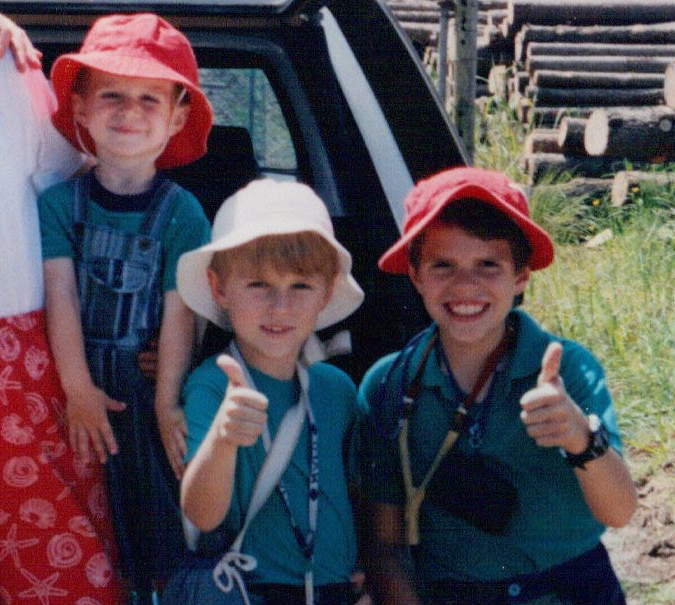
Setting out on our overnight hike in the Outeniquas: Niels (8), Dieter (5), Pierre-Henri (2).

Summer 1995, when the boys were 2, 5 and 8 years old respectively, we decided it was time to spend a night in the mountains – and what better wilderness than the area around my hometown George? We would hike the first day of the famous Outeniqua Hiking Trail, overnight at Tierkop Hut, and hike down to Saasveld Forestry Station the next day. The young family Joubert was in high spirits when my dad dropped us off at the foot of the mountain, where the trail started. Two backpacks, 5 sleeping bags, food and liquid for 2 days, and warm clothes for the night. The youngest was just out of diapers… After a lovely (though strenuous) uphill hike through forests and pine plantations we found the cabin, made a huge fire and dinner, went to bed early and tried to settle down for the night. The cabin was dusty, and looked weather-beaten and dirty, as if people had not slept there for quite some time… But we decided that was simply part of the bundu experience, cleaned up as best we could, and got into our sleeping bags. We were exhausted and finally all fell asleep.

The next day, taking the route down the eastern side of the mountain, we ran into trouble: signposts were flattened by recent wind-storms and rain, apparent new paths were washed into the mountain side by flood waters – and previous routes disappeared with vegetation blown over tracks and trails. After following gravel roads and minor tracks for half the day, we crossed an unexpected weir and noticed the huge Garden Route Dam (strangely) to our left. We realized we were no longer following the trail on the map – we were in fact not even on the map… but kept going. The town was just below us, down the mountain. We both had hiked the Outeniqua Trail before – twice. Though we could see the familiar landmarks, we were simply unable to reach them. It was indeed a strange and desperate feeling – especially since we knew the strength in these little legs walking with us, would not last forever, and many kilometers may be needed to get to a safe haven. Crisscrossing the river, unable to find our way to the forestry station, it seemed to be the right time to seek help. Then the sky became overcast, the first rain drops fell, and it was getting dark… Also, our food and water supplies were low, and we did not have a tent or any form of shelter with us. I already imagined us sleeping under a bush for the night.

In the 90s cell phones were rare and cell phone reception poor. We had the company phone with us, and decided it was best to walk till we found reception, and then call my dad for help. And, lo and behold, Dad got our call, and asked us to describe our surroundings. Through years of mountain biking and hiking in those mountains, he could more or less determine our position from a description of our surroundings: forestry watch tower to the right, Garden Route Dam to the left, pine plantation below us…. He instructed us to stay on our current path, and he would drive up in his ‘bakkie’, carrying his bike, whistle and flashlight. If he could not drive further, he would take his mountain-bike, and blow his whistle while flashing the light, till we could see him – and flash back. Surrounded by dense indigenous forests we were pushing our luck.  If his orientation was correct, he might be able to meet us in the mountain.

And he did. Seeing his light, and hearing him coming up the mountain was probably one of the most relieving moments of my life. He found us halfway up a deserted forestry road, the courageous family Joubert, quite timid but overjoyed at the sight of him appearing from the semi-dark forest. At that stage the youngest was wrapped on my back, African style, sucking his thumb, and the oldest two were dirt-smeared, holding on to their water bottles. But their eyes lit up like stars in the southern night, filled with excitement and delight in the face of so much adventure.

Dad drove us home where Mom had warm soup, a hot tub, and cozy beds.

We had a life story to remember.

Cape capensis

July 17th, 2013

Hiers n Trader Joe’s  ‘Organic for the working class’ naby my huis, waar ek onlangs die stokvis ontdek – en skielik wonder, het die outjie dalk by Vleesbaai gewei daar teen Kowa se bank… of Stemerklip? Of om die draai by Fransmanshoek se Malbaai… of voor by die Saal? Visplekke waar ek kleintyd saam met my pa gaan rots’hengel’ het, douvoordag opstaan as die gety reg is, en dan sit en sit en wag en wag… en as ek gelukkig is kan ons doodsveragtend teen die kranse afklouter en die stompkop/beenbek of kabeljou gaan ‘gaff’…! Aas uithaal was iets wat vandag in Discovery Channel opspraak sou verwek: my pa klim af in die diep skeure vir rooiaas en ‘siffies’, ek sit bo en hou die deinings dop tot die volgende grote wat oor die rotse gaan slaan en my pa daar sal afslaan as ek nie betyds waarsku, of reg oordeel nie… Ja, ons was strandlopers en ons het dit nie besef nie. Getye was soos asemhaal en volmaan-springgety was die beste. Opstaan 4-uur in die oggend om 5-uur op die rotse te wees was nie vreemd nie. Laterjare het ek die duinepad Fransmanshoek toe gehardloop om reg te wees vir die atletiekseisoen. Ons was so bevoorreg. Ons was so mens! En my hart trek met n punt na daardie menswees.
Dit is nog daar, nie waar nie?
Ten minste die springgety is nog daar, en die stokvissie wat alliepad tot in Kalifornie getoer het om my te laat onthou.
En verlang
Na strandlopertye.

.